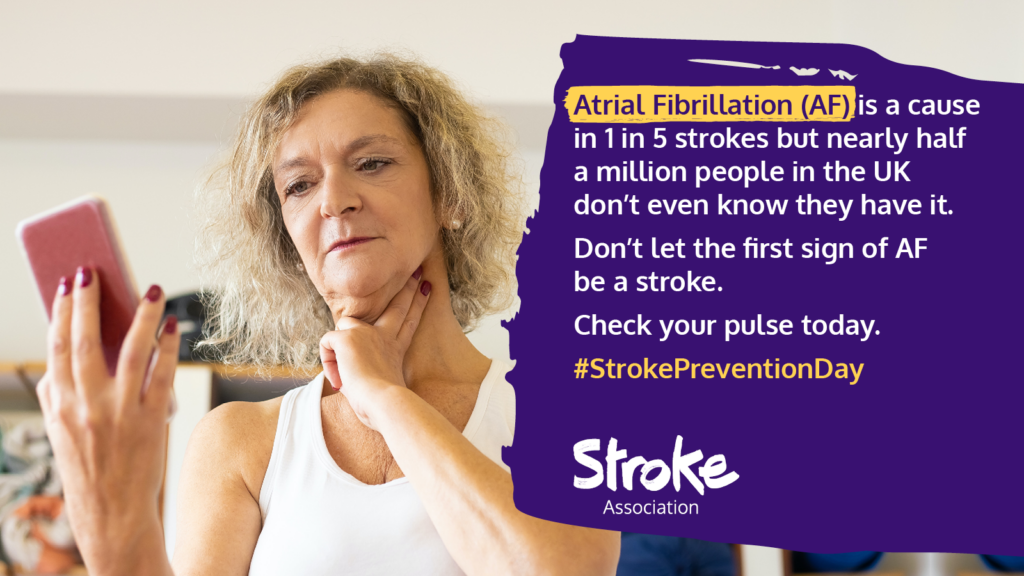
According to Public Health England data, a significant number of undiagnosed patients across Hampshire, Isle of Wight and Thames Valley live with undetected hypertension (HTM) and atrial fibrillation (AF).
If GP practices are able to detect and treat these patients, we have the potential to avoid 1,870 strokes and 879 heart attacks – as well as to make of £49 million in savings, over a three year period. The social care cost of treating stroke across the UK is over £5 billion per annum.
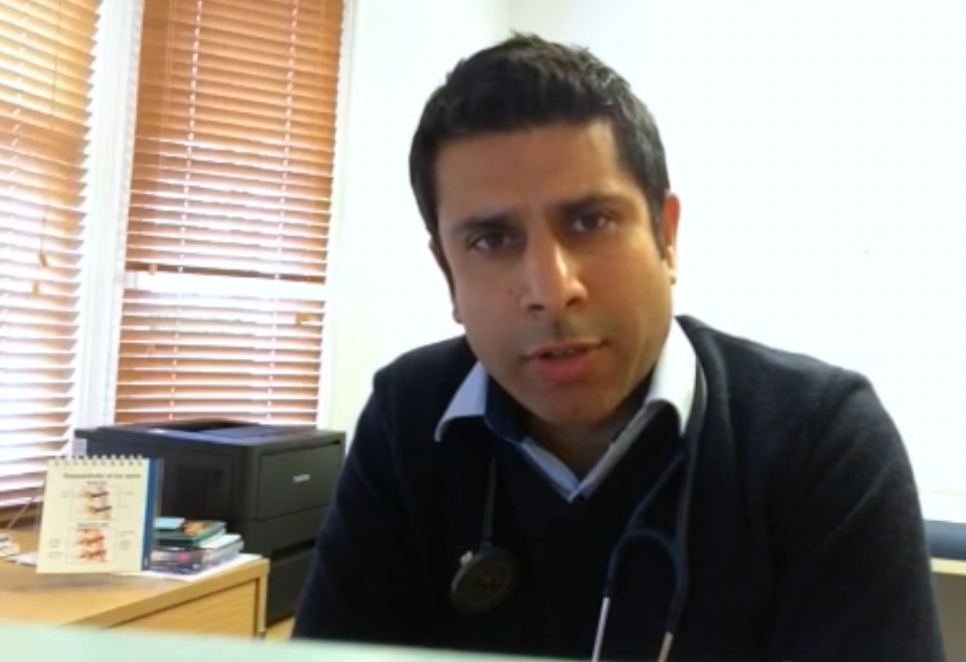
Dr Raj Thakkar (pictured above), GP lead for cardiovascular disease (CVD) in the Thames Valley region, believes that variations in the prevalence of both HTN and AF across CCG regions of Hampshire, Isle of Wight and Thames Valley, relates in part to the quality of clinical coding.
“People who are on treatment for HTN or AF, but who are not coded, may be at risk of not being recalled as part of the disease register protocol, and this may have a direct impact on their risk of cardiovascular complications and quality of life. Equally, under-recording will artificially under-estimate the prevalence of patients with known HTN and AF,” said Dr Thakkar.
Whilst it is recognised that practices are financially supported to identify, record and treat patients with both HTN and AF, there is a clear gap in coding and a potential consequence in care of this cohort of patients. This has resulted in an innovative data cleansing project led by Dr Thakkar, funded by NHS England, and offered to 494 practices across Hampshire, Isle of Wight and Thames Valley.
Project implementation
To follow were some of the key tactics this project has employed:
- Funding was provided for two sessions of clinical time per practice, to enable clinical staff to review patient records and undertake a robust code cleansing exercise for AF and HTN
- Each CCG led and implemented the project with their constituent practices to ensure local ownership and buy-in
- Each CCG was required to report on baseline data and the increase in prevalence
- A specified search of medical records resulted in identifying the patients who were receiving treatment for HTN and AF, but who did not currently have a clinical code
- At least one CCG also required GP practices to review patients with persistently high blood pressure readings without a problem code
- NICE guidance was referenced in the original offer letter to CCGs signed by the Director for Commissioning and Medical Director for NHS England, South East
- CCGs were required to declare any legacy funds and to use these monies on practices with the lowest prevalence of HTN and AF.
Key learning points
- Each CCG took a different approach – some paid a flat fee to GPs, some used a population weighted system, others a medicines management team approach. Whilst acknowledging this was an issue, there were some constraints in that flexibility was required to work with local structures and systems
- Some searches undertaken by GP practices were more sophisticated than others. This was due to the use of different data collection methods, for example, the use of a pharmacy technician where in post at a practice, which increases the sustainability of rigorous long-term monitoring
- In some areas, practices that did not engage had the poorest baseline. This phenomenon requires local exploration and interpretation
- A small number of GP practices only undertook one search for either AF or HTN. This was considered their choice by the host CCG, although in some cases CCGs persuaded practices to undertake both searches
- A standardised audit tool would have resulted in more reliable baseline data. This would have made the project vision clearer from the outset and may have resulted in the recruitment of more GPs to the project
- The under-recording of AF and HTN across primary care highlights there is likely to be chronic under-recording across other long term conditions such as diabetes, COPD and heart failure
- Several coding anomalies were identified, such as in-hospital patients treated for hypertension but not coded on discharge and/or patients moving GP practices and not coded. Furthermore, patients with co-morbidities e.g. diabetes and found to be hypertensive were coded for diabetes, but not for HTN
- A key factor in the project’s success was being part of a wider CVD network programme, as well as CCG ownership to deliver locally
- There was significant variation across GP practices, due to a number of factors including culture, workforce and demographic served.
Key results so far
- A total of 284 practices have participated in the project to date, with a further six practices due to complete shortly. That’s a penetration rate of 76% across Hampshire, Isle of Wight and Thames Valley
- The total number of patients that have been added to the HTN register so far is 18,623
- The total number of patients that have been added to the AF register so far is 3,301
- It is estimated there is an AF prevalence of 85%, which means a deficit of 6,040 people
All CCGs across Wessex and Thames Valley participated with the project, except for NHS Dorset CCG and NHS Isle of Wight CCG, as both were already involved with an AF initiative with Wessex AHSN. There was good representation across all participating CCGs, however, a small number of practices declined, citing competing priorities.
“This has been a flagship project, identifying patients at risk of AF, stroke and myocardial infarction. It highlights significant under-coding of AF and HTN across STP areas, as well as the significant potential for improvement. This important work will inform future innovative workstreams in CVD prevention across Hampshire and Thames Valley,” said Dr Thakkar.
You can read the full report of the project by Dr Thakkar here: Abstract of data cleansing project