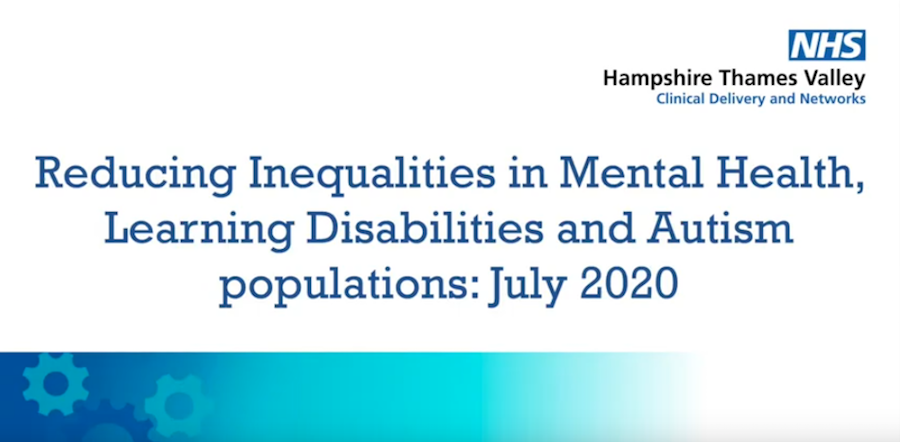
NHS England South East held a webinar on Monday 27th July bringing a wide range of stakeholders and speakers to raise the issue of growing inequalities for our populations before, during and after the pandemic.
Subjects covered included;
- Louis Allwood from the Centre for Mental Health highlighting the widening gaps in both health and social terms not only for those at risk of mental illness but wider populations faced with economic uncertainty, increased risk of poverty and those populations at greater risk including women, those experiencing violence and abuse in a domestic setting and Black, Asian and minority ethnic communities being further exposed;
- John Spiers from Autistica raising the growing evidence base of the inequalities that people with autism face and the underlying biological, societal, structural and personal factors which are hardwired into people’s lives and experiences;
- Communicating the learning from a rapid call for evidence from Dr Pauline Heslop of the University of Bristol on the first 50 deaths of people with a learning disability during COVID-19 with interesting conclusions based on care approaches, increased risk factors and closer attention being required in areas such as discharge planning from hospital and the use of Do Not Attempt Cardio-Pulmonary Resuscitation (DNACPR);
- Jo Rollings from Berkshire Healthcare NHS Foundation Trust giving an insight into the work their IAPT services have done to prioritise and “reach-in” to their BAME populations to address the unmet need against the demographic of a diverse town in Slough, and;
- How the national policy focus for NHS England is advancing its approach to ensuring the equality agenda is “hardwired” including data quality and usability, exploring financial levers and incentives and deriving best practice and frameworks to ensure continuous improvement and commitment to quality
You can view the webinar here: