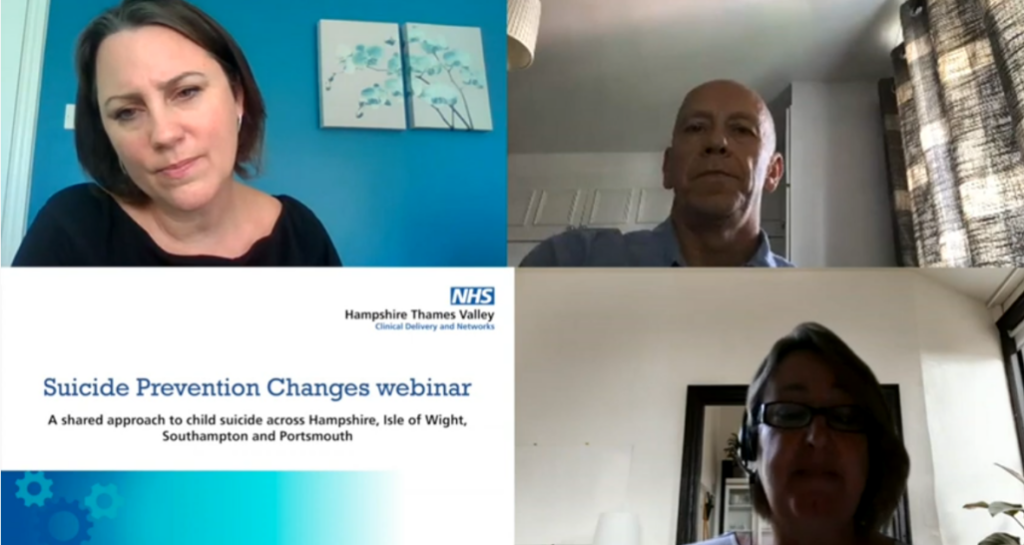
The following webinar documents what has been learnt through the development of a shared approach towards tackling child suicide across Hampshire, Isle of Wight, Southampton and Portsmouth.
“We are mindful of national and regional concerns about an increase in suicide and suicidal ideation amongst children and young people (CYP), in response to both wider societal stress and domestic stresses in the current environment. Those at risk of social exclusion and isolation are particularly vulnerable at this time,” says Andrea King, Specialist Advisor, NHS Hampshire and Thames Valley Clinical Delivery and Networks.
“In advance of these developments CYP mental health systems leaders across Hampshire STP have been working on changes to a shared partnership response to CYP suicide prevention. We offer this learning to national systems leaders and are happy to discuss the approach to reaching agreement to implement changes if that would be of assistance.”
In summary, these changes include:
- Introducing free suicide prevention training to the CYP multi-professional workforce
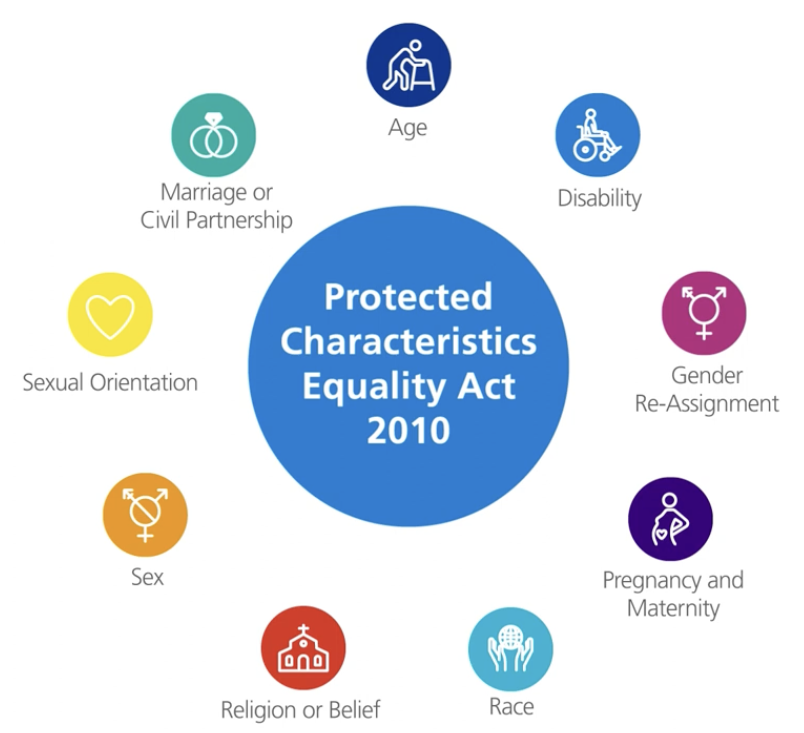
- Adapting the questions asked at home visit/Rapid Response following the death of a child where suicide is suspected to enable protected characteristics, risk and trigger factors to be more clearly identified; to inform both short-term support for those significant others most affected by the loss and the wider peer network; whilst also informing longer term service design and delivery
- Using this detail to inform Child Death Overview Panel (CDOP) strategic analysis and systems learning
The following webinar features:
- Andrea King, Specialist Advisor, NHS Hampshire and Thames Valley Clinical Delivery and Networks
- Amy McCullough, Consultant in Public Health, Southampton City Council
- Dave West, Detective Inspector, Hampshire Constabulary
- Nicola Brown-John, Independent Chair, HIOW Child Death Overview Panel
- Derek Benson, Independent Chair, Hampshire, IOW, Portsmouth and Southampton Safeguarding Executive
The key changes to home visiting/rapid response include:
- routine questions about LD/SEND
- routine questions about sexuality/gender identity
- routine questions about faith and cultural heritage
- stronger analysis of risk factors and trigger/catalyst events
These factors have been highlighted as the key areas in which risk to suicidal ideation (due to exclusion, disadvantage, isolation, etc) and subsequent suicide is higher. Dr Gavin Lockhart, SE Clinical Lead has kindly reviewed these changes, alongside colleagues from the police, named and designated safeguarding, social care and Public Health partners.
You can download our summary document:
‘Suicide Prevention Changes: Building a Learning System’ here.